Why Durable Goods Hold Value Longer Than Disposable Ones
Residual usefulness, not physical durability, drives what buyers will pay.

Durable goods hold their resale value because the economic definition of "durable" has nothing to do with how sturdy something feels in your hands. It's about how much usable value is left after you've already gotten your use out of it. Economists draw a specific line: a durable good lasts at least three years and isn't used up in the process of using it. A nondurable good goes the other way. Food, gasoline, paper towels. You use them once, maybe a handful of times, and they're gone. There's nothing left to resell because there's nothing left, period.
Cars, washing machines, laptops, furniture, bicycles, sports equipment, jewelry, watches. All of these sit on the durable side of the line because they keep delivering value long after the first time you use them. A bike doesn't stop being a bike after one ride, which is the whole test: does the thing still have work left in it? If yes, it's durable. If the answer is "no, it's a paper towel," you're not going to find a buyer for it on eBay, and that's fine, because nobody's trying to.
Why residual utility is the engine of resale value
Every durable good carries a kind of leftover balance of usefulness, and that leftover balance is what somebody else will pay you for. Think about a KitchenAid stand mixer. Buy it for years of birthday cakes and bread dough, use it for two of those years, then decide you're done baking. The mixer hasn't expired. It's just sitting there with three, four, five years of good mixing left in it, and that remaining life is a real, transferable thing. A buyer can hand you cash for it and walk away with genuine value, not a sympathy purchase.
This is the mechanism behind the entire secondary market. One explainer on durable goods puts it simply: "many durable goods retain significant resale value, providing consumers with the option to sell them second-hand." It works for both sides of the transaction. The seller recovers part of what they spent instead of letting the rest of the mixer's life go to waste in a closet. The buyer gets a appliance that works fine for a fraction of the price of a new one. Compare that to a nondurable: a used paper towel or a half-eaten sandwich has nothing left to sell, because there's no "remaining life" left to transfer. A barely-ridden bicycle, on the other hand, is basically a stack of unused utility waiting for someone to buy it.
The important exception: when physical durability and market demand diverge
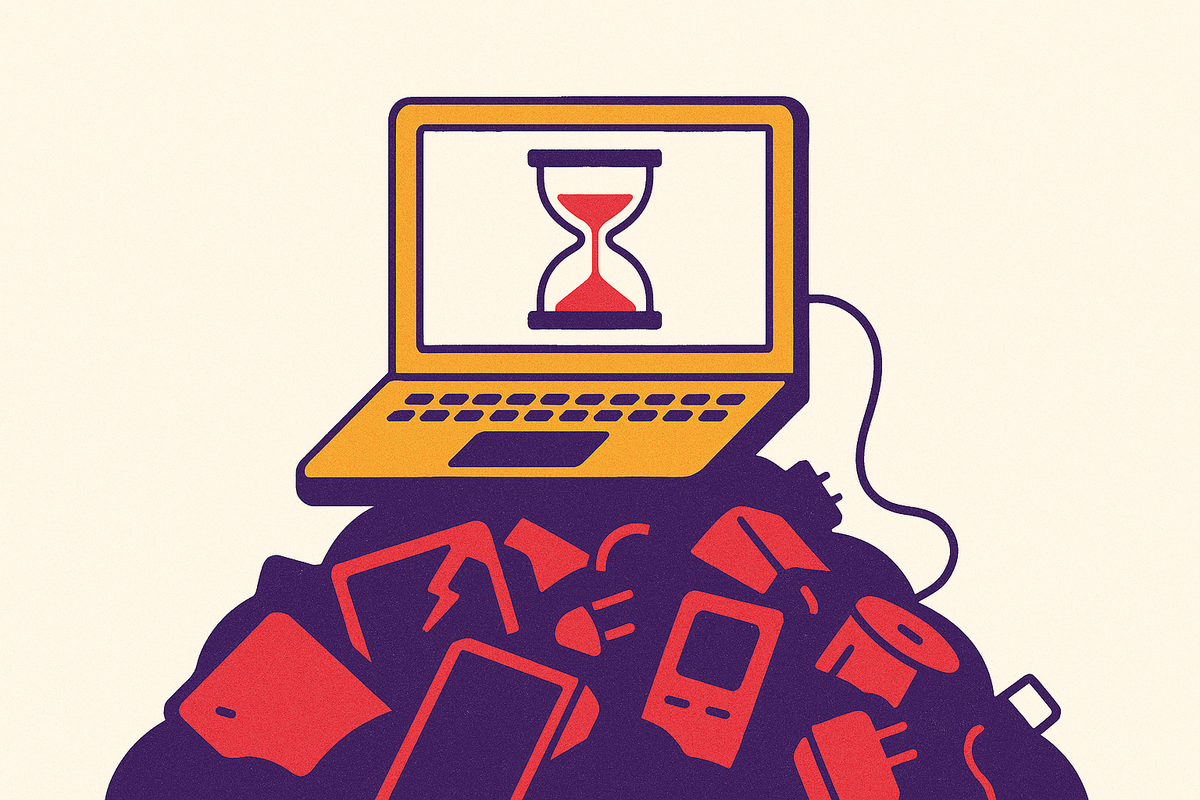
A durable object staying in one piece doesn't guarantee that anyone still wants it, and this is where the argument needs a reality check before it goes any further. Technology is the clearest case. A laptop can run for five years without so much as a scratch, and yet its resale value can fall off a cliff well before the machine itself gives out. Software stops getting updated, processing power looks slow next to newer chips, and the market price follows all of that down, not the condition of the hinges or the keyboard. Physical life and market life are two different clocks, and in electronics they often don't run at the same speed.
That doesn't break the earlier argument, it sharpens it. Obsolescence like this is predictable and mostly confined to categories where the underlying technology keeps moving. Furniture, tools, musical instruments, vintage collectibles, branded goods with a stable look, none of these get leapfrogged by a new model every year the way phones and laptops do. Knowing where the exception lives tells a seller something useful before they even open a listing: figure out which category an item falls into, and you'll know whether its remaining physical life is actually going to attract a buyer, or whether the market moved on without it.
Resale value by durable goods category
Furniture made of solid wood holds a big chunk of its original value on the secondary market, mostly because its utility, a functional surface, a place to sit, doesn't depend on a brand name or a software update. It just needs to keep being a table. Fast fashion furniture and generic household items are at the other end of that spectrum: built cheap, worn out fast, and not worth much to anyone by the time the original owner is ready to part with it.
Branded electronics are a different story, and Apple is the clearest example. iPhones across generations, MacBook Air and Pro models, Apple Watch, AirPods, these move steadily on resale platforms because the brand name itself functions as a shortcut buyers use to judge how much life is probably left in the device. That said, the obsolescence exception from the last section applies hardest right here: prices shift fast around new product releases, so timing the sale and checking real sold prices matters more in electronics than in almost any other category.
Clothing works on a similar trust shortcut. Coach, Nike, Michael Kors, Lululemon, Kate Spade, these names give buyers confidence that the wearability and durability they're paying for is actually there, confidence they wouldn't extend to an unbranded item with no track record. Shoes and sneakers in particular sell through at a strong rate compared to other clothing categories.
Then there's the category where durability and demand line up almost perfectly: collectibles. LEGO sets and minifigures, vintage Pyrex in patterns like Eyes, Butterprint, and Lucky in Love, these can sell for as much as or more than their original retail price, because scarcity adds value on top of the physical durability. The object doesn't just survive, it becomes more wanted as fewer of them remain in circulation.
Small appliances follow the brand-trust pattern too. KitchenAid and Dyson hold value because what they do, mixing, cleaning, doesn't change much over time, and the brand name tells a buyer the machine probably still does it well. Sporting goods, tools, and instruments round out the list: golf clubs, bicycles, camping gear, power tools, musical instruments. None of these age fast, and all of them serve a buyer who wants the function without paying full price for a new one.
Why the current market rewards durable goods sellers
The case for reselling durable goods gets a boost from current prices on new ones. Tariffs on new appliances and imported consumer goods, and to a smaller degree electronics, have pushed retail prices up on the very items that tend to resell well. Buyers who would have bought new a couple years ago are now shopping used instead. Pre-owned and refurbished goods already make up a large share of eBay's gross merchandise volume, and that's a mainstream behavior. Buyers consistently point to saving money as their main reason for choosing pre-loved goods, and when new prices climb, that savings gap gets wider and pulls more buyers toward secondary listings. None of this changes the underlying mechanics. Residual utility was always the thing driving resale value. Current conditions just mean there's a bigger, more motivated crowd showing up to pay for it.
Checking an item's resale value before listing
Knowing that durable goods hold value in general doesn't tell a seller whether the specific lamp or laptop sitting in their garage is worth the fifteen minutes it takes to list it. The only reliable way to answer that is to check what identical items actually sold for, not what other sellers are hoping to get for theirs, and not whatever number a platform spits out as an estimate. Asking prices are wishes. Sold prices are facts, and the gap between the two is often large enough to mislead anyone pricing by guesswork.
On eBay, search the exact item and filter by "Sold Items." That filter returns real completed transactions. "Completed Listings" on its own is a murkier pool, since it includes both sales and listings that simply expired unsold, so it's less reliable on its own. A good rule of thumb: look for at least three identical items sold within a recent window. Three sales in a defined timeframe gives a price floor that's solid enough to trust. Sellers who've completed at least one sale also get access to eBay's Product Research tool (formerly called Terapeak), free inside Seller Hub, which stretches that lookback window to three years and surfaces actual Best Offer sale prices that the standard search filters hide from view.
Facebook Marketplace doesn't make this easy. It only shows the original asking price on a sold listing, capped at the most recent 30 days, with no record of what the item actually sold for. The workaround is simple: pull sold data for the same item from eBay and use that as the starting point for a local Marketplace price.
Whatever the starting number is, grade it down by condition. New drops to Very Good, Very Good drops to Good, Good drops to Used, and each step takes a bite out of the ceiling. Electronics lose value fastest at the top end of that scale; clothing tends to slide more gently. This same check answers a second, more important question before any listing goes up: is this worth listing? If every sold comp for an older tablet model comes back under a few dollars, the item is still physically fine, durability was never in question, but there's no buyer pool left for it. At that point, donating it or tossing it saves more time than listing it ever would.
Matching the right durable good to the right marketplace
Residual utility only turns into cash if it reaches the right buyer, and different platforms pull in very different kinds of buyers. eBay works best for anything shippable: niche items, collectibles, electronics, replacement parts, anything that benefits from a buyer pool that stretches across the whole country. That wider pool often pays off directly. Niche and collectible items frequently sell for noticeably more on eBay than they would locally, simply because the one buyer who really wants that item might live a thousand miles away. eBay also keeps sold-listing data in the same place sellers list items, so research and selling happen in one spot.
Facebook Marketplace is built for the opposite case: bulky items like furniture and appliances that are a pain to ship, and cash sales where skipping platform fees means keeping more of the sale price. Well-priced furniture on Marketplace tends to move fast, often within 3 to 7 days, which makes it an efficient channel for anything too big to box up and mail. For specific categories, dedicated platforms exist too. Swappa focuses on phones, tablets, laptops, watches, audio gear, game consoles, cameras, drones, and fitness tech. The RealReal specializes in authenticated luxury resale.
Many experienced sellers don't pick just one. Listing an item locally on Facebook Marketplace for a fast, fee-free sale while also listing it on eBay for national reach, then pulling it down from whichever platform it didn't sell on, is a standard way to cover both kinds of buyers at once. That used to take real effort to manage across separate accounts and separate photos. AI-assisted listing tools that publish the same item from a single photo set to multiple platforms at once have made that same strategy available to someone listing their first item, not just sellers who do this for a living.
Writing a listing that communicates remaining value to a buyer
A buyer deciding whether to pay for a durable good is really deciding whether they trust the remaining value in it, and photos do most of that convincing before a single word gets read. Shots need to show the item's true color, its form, close-ups on any scratches or wear, from every angle that matters. eBay buyers expect clean, well-lit photos against a neutral background, almost like a catalog shot. Facebook Marketplace buyers expect the opposite: a natural, slightly imperfect smartphone photo taken in the item's actual setting. Overly polished photos on Marketplace can backfire, since they start to look like stock images.
The written description carries the rest of the weight. Exact measurements, a condition note for every flaw no matter how small, and a plain statement that the price already accounts for those flaws head off disputes before they start and build trust. Keywords matter just as much: the title and description need to name the brand, the model, the style, and the use clearly enough that someone searching for exactly this item actually finds it.
A listing, when it's working, is really a document that transfers utility from one owner to the next. It tells a stranger what they're buying, how much life is left in it, and what condition that life comes in. The clearer it does that job, the faster the item sells and the fewer questions come back afterward. AI-generated listings already do a version of this work automatically, pulling item identification, condition grading, and keyword-rich descriptions straight from a single photo. The skill of writing a convincing listing isn't a barrier standing between a first-time seller and a sale anymore.