Recommerce as a Corporate Sustainability Strategy
Retailers are turning returned goods into a billion-dollar revenue stream instead of landfill waste.
Retail returns cost companies more than $890 billion in 2024, and that number is the starting pressure here, not a footnote to skim past Supply & Demand Chain Executive. Every box that comes back to a warehouse has to go somewhere, and for a long time "somewhere" meant a landfill or a markdown rack, both of which quietly burn cash and brand equity at the same time. The take-make-dispose model was already creaking under storage costs and inventory write-downs. Now add disposal liability, and it starts to look less like a cost center and more like a leak nobody's plugging.
And the leak is getting bigger, not smaller. As SKU counts climb and e-commerce volume keeps growing, return rates climb right along with them, so the pile of unsold and returned goods just keeps stacking up. Meanwhile, regulators are done waiting around. The EU's Circular Economy Action Plan, Right to Repair laws now active in over 27 U.S. states as of early 2026, and recycling provisions baked into China's 14th Five-Year Plan are all pushing, one way or another, toward secondhand participation becoming standard practice rather than a nice-to-have DataIntelo. Layer on the EU's Ecodesign for Sustainable Products Regulation and its Digital Product Passport rules, and brands will soon have to trace where a product's materials came from and where they end up, across the product's entire life.
Landfilling or destroying unsold goods isn't just wasteful anymore, either. In EU markets especially, it's turning into a legal and reputational landmine. Nearly every company already runs a reverse logistics operation, whether it wants to or not. Returns come back, excess inventory piles up, products reach end of life. The operation exists. The only open question is whether that machine spits out cost or spits out revenue. The companies figuring this out aren't treating it as a corporate social responsibility checkbox. They're rebuilding it as a line item on the revenue side of the ledger.
Recommerce as a corporate program, and how it differs from donation or liquidation
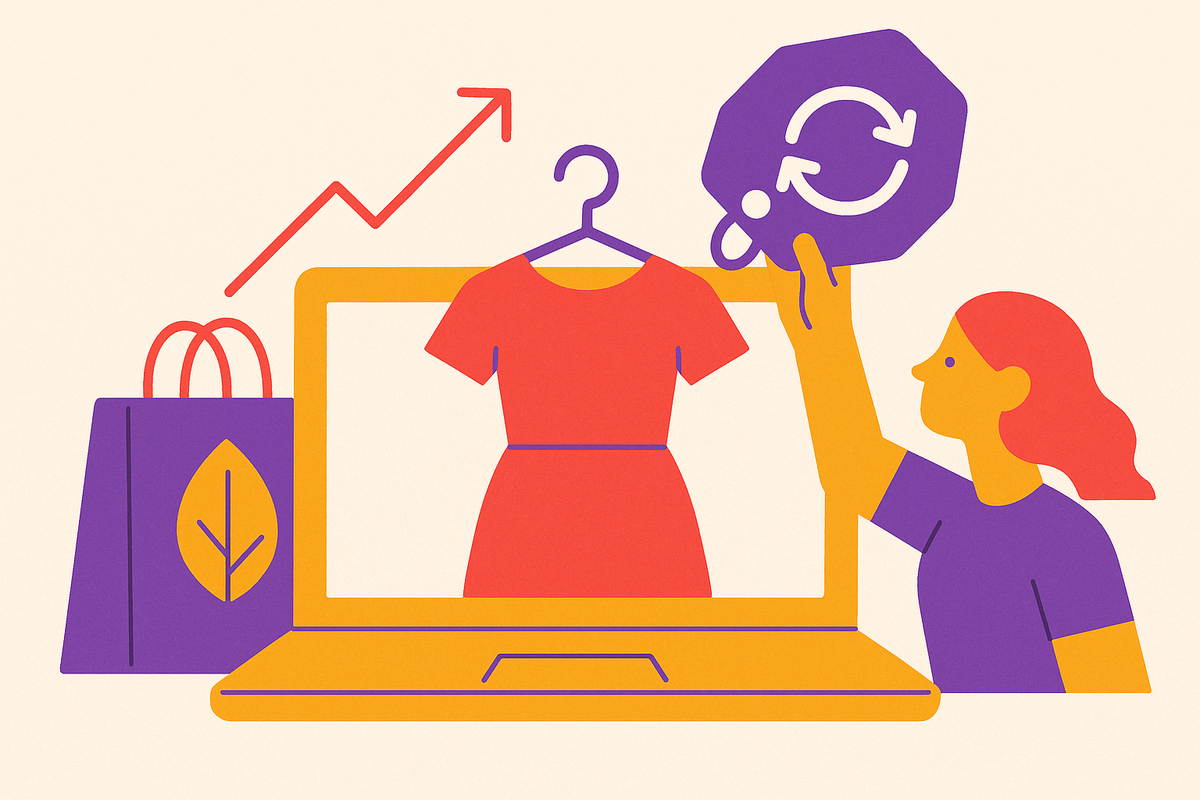
Recommerce, short for reverse commerce, means reselling, refurbishing, or recycling products after someone's already used them, which turns what used to be waste into a fresh revenue stream. This differs from the old playbook in a fundamental way. Liquidation dumps inventory in bulk at a steep discount, and the brand loses its grip on pricing, presentation, and the customer relationship the moment the truck pulls away. Donation gets the liability off the books, sure, but it recovers zero revenue and hands over zero data about who's loyal to the brand. And destruction, as covered above, is increasingly illegal or reputationally toxic, especially in EU markets.
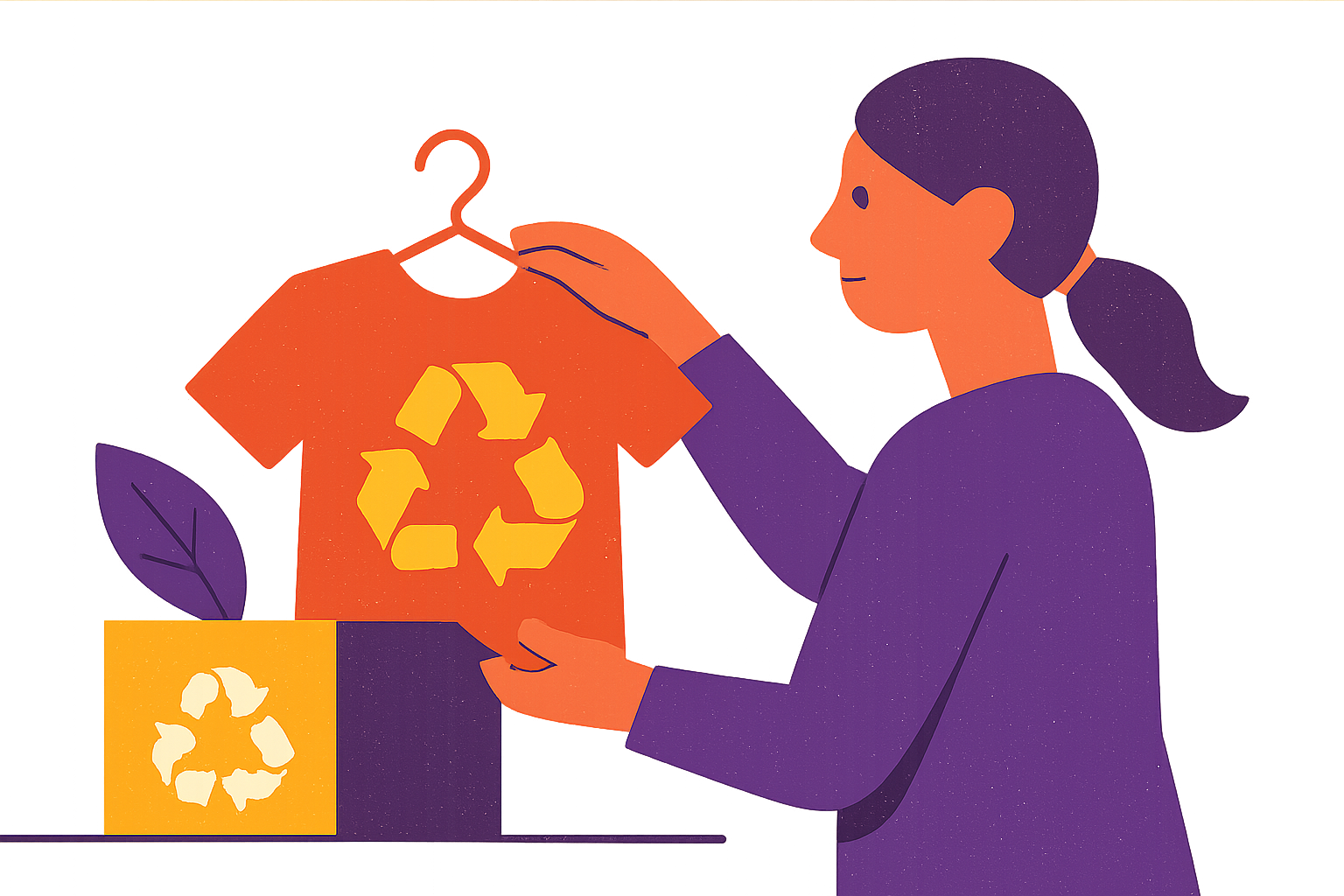
Corporate recommerce works differently. It's a structured loop: a product comes back, gets inspected and graded, gets refurbished, and either gets resold or, if it's beyond saving, gets recycled responsibly. None of that loop functions without accurate, traceable data at every step, because a company can't grade what it can't verify and can't sell what it can't stand behind. Brands that keep this process in-house, or that partner with a platform built for it, keep the resale margin and keep control over pricing, presentation, and authentication, which affects both profitability and brand reputation. Losing control of any one of those three is basically what liquidation is.
There's a B2B side and a B2C side, and they're both legitimate, just operationally different animals The Retail Exec. B2B recommerce is about moving excess inventory and dead stock to other businesses. B2C recommerce is trade-in programs and branded resale storefronts, the kind a shopper interacts with directly. Neither one is a niche play anymore: over 2,400 publicly listed companies had a formal take-back or resale program running as of the first quarter of 2026, an industry rather than a scattering of pilot programs DataIntelo. That's not a pilot program count. That's an industry.
The market signal: consumer demand that makes the business case real
The global recommerce market is projected to nearly double by 2029, crossing $700 billion and growing faster than retail overall Supply & Demand Chain Executive The Retail Exec. That's not a trend line, but a market rewriting itself. On the consumer side, buying secondhand has stopped being a niche habit and started looking like a majority behavior, at least in some markets: 93% of Americans bought something secondhand in 2025.
eBay's fifth annual Recommerce Report, which polled more than 27,000 people, found 89% of consumers worldwide plan to hold steady or spend more on secondhand goods in 2025, with 59% of Gen Z and 56% of Millennials specifically planning to spend more eBay Recommerce Report DataIntelo. Why are people buying used? That means a recommerce program catches both the bargain hunters and the eco-conscious crowd. It's catching both in the same net.
Retail executives have noticed. 86% of them believe their own customers are already buying and selling in secondary markets, whether their brand participates or not eBay Recommerce Report Supply & Demand Chain Executive. And in 2025, 70% of consumers said they bought secondhand for reasons tied to sustainability or economics, often both at once Supply & Demand Chain Executive Distinct Recruitment. Secondhand tends to be where people turn when the economy wobbles, making recommerce one of the few retail categories that gets stronger, not weaker, in a downturn.
The strategic payoff is real for a brand paying attention. If a customer is going to buy a used version of a product anyway, that sale is either happening on the brand's own platform or on someone else's. A branded resale channel keeps that customer, and that revenue, in-house instead of handing it to a third-party reseller. It's also not just a one-time transaction. 90% of consumers say they're more likely to buy again from a brand that offers sustainable options, which turns a resale program into a loyalty engine as much as a revenue recovery tool Inriver. Motivations are split but converging: an eBay Recommerce Report via Small Business Trends found 81% choose pre-loved goods primarily for financial reasons, while 45% cite sustainability, meaning recommerce captures value-seekers and values-seekers simultaneously.
The architecture and trade-offs of leading brands' recommerce programs
Companies building these programs are generally choosing between two structural models. One is running it in-house, owning take-back, grading, refurbishment, and resale directly, which keeps the most margin but demands real investment in infrastructure. The other is going through a platform partner, which gets a program to market faster and cheaper on the fixed-cost side, in exchange for splitting the economics with that partner.
Trove Recommerce is the clearest example of the platform route. It launched back in 2012 as a peer-to-peer resale tool and has since grown into full B2C infrastructure, now powering recommerce sales across more than 700 brick-and-mortar stores, with clients including REI, Patagonia, Levi's, and Lululemon The Retail Exec. ThredUp runs a similar model called Resale-as-a-Service, powering programs for Adidas, Crocs, and Gap, letting those brands offer resale without building reverse logistics infrastructure from scratch.
The named programs tell the story better than any framework could. Patagonia's Worn Wear logged more than 137,000 trade-ins in 2025, nearly 71,000 of them coming through returns and warranty claims, and the brand's Shop Used feature, launched online in September 2024, resells cleaned and repaired items while routing anything beyond saving into recycling Earth911. Patagonia even teamed up with Eastman in 2024 to run 8,000 pounds of clothing waste, pre- and post-consumer, through a molecular recycling process Earth911. REI's Re/Supply program sold almost 1.4 million pieces of used outdoor gear in 2024, double what it moved in 2019, taking trade-ins on backpacks, tents, sleeping bags, and apparel in exchange for store credit Earth911.
IKEA's take-back program runs in 33 U.S. stores and accepts more than 5,000 product types as of 2025, and globally, the company's circular initiatives cut its climate footprint by 24.3% while revenue still grew 30.9%, part of a stated push to be fully circular by 2030 Earth911. Levi's SecondHand, launched in 2020, was the first buyback program from a major denim brand, paying customers between $5 and $30 in trade-in credit per item, and the brand states that buying a pre-worn pair of jeans instead of new saves around 80% of the CO2 emissions and 1.5 pounds of waste Levi's / Trove. Lululemon's Like New program, built with Trove, launched in May 2021 and went nationwide by April 2022, letting shoppers drop items at any U.S. store for gift cards. On Running's Onward by On program, launched in September 2022, pays customers $35 in credit for accepted pairs, which get cleaned and resold, or donated and recycled if they don't make the cut Trove.
Europe offers a different flavor of the same idea. Norrøna and Polarn O. Pyret have both built repair shops directly into their stores, designing products to be durable and fixable well ahead of EU rules that will require exactly that, with binding textile-specific measures expected around 2027 DataIntelo. Selfridges in the UK has set a public target of 45% of all transactions coming from resale, repair, rental, or refill by 2030. And on the B2B side, Queen of Raw's inventory management software helped one multinational corporation save more than $14 million in inventory and holding costs simply by diverting materials away from the landfill The Retail Exec.
The revenue and cost recovery logic that makes these programs financially viable
Brands running recommerce programs can recover somewhere between 15% and 30% of a product's original value, all while cutting what they'd otherwise spend on disposal, and that range should be read as a floor, not a ceiling Inriver. The recovery isn't one revenue line, it's several running at once: margin on the resale itself, lower storage and holding costs for goods that would've sat in a warehouse, avoided disposal fees, and less pressure to slash prices through deep liquidation discounts that damage the brand's pricing over the long run.
IKEA is the sharpest proof point available. A 24.3% cut to its climate footprint alongside 30.9% revenue growth means the sustainability metric and the growth metric moved in the same direction, at the same time, which is exactly the alignment this whole strategy is supposed to produce Earth911. Vinted backs this up from the pure-play resale side: the platform posted its first profitable year since launching in 2008, with 2023 revenue up 61% to €596.3 million, proof that the platform model's unit economics hold up once you hit scale Distinct Recruitment.
The loyalty math adds another layer that a simple resale ledger tends to miss. With 90% of consumers saying they're more likely to buy again from a brand offering sustainable options, a trade-in program isn't just recovering value on the item that came back, it's pulling that customer back through the door for the next purchase Inriver. On the cost side, AI is doing real work: better tools for pricing, grading, and authentication have cut down the information asymmetry that used to make recommerce too expensive to run at any real scale. The whole thing hinges on accurate grading at intake, though. A brand that can't reliably tell a barely-worn return from a beat-up one can't price either correctly, and margin bleeds out at every step after that.
One honest caveat: financial disclosure across these programs is uneven. REI doubling its resale volume from 2019 to 2024 is a strong signal, but most brands simply don't publish program-level profit and loss statements Earth911. The direction of the business case is clear even where the exact math stays behind closed doors.
The technology infrastructure that makes corporate recommerce scalable
None of this runs without the data working first. A company can't trace an item, verify its condition, or give a customer the transparency they now expect, unless the underlying product information is structured, accurate, and actually accessible. That's the dependency everything else sits on top of.
A few pieces of infrastructure appear repeatedly in programs that actually scale. Condition grading systems give a company a consistent, repeatable way to sort what comes back, so items get routed correctly to resale, refurbishment, or recycling instead of getting stuck in limbo. Traceability means knowing what a product is made of, where it's been, and what's inside it, which is going to be required for EU Digital Product Passport compliance by 2027 DataIntelo. Pricing intelligence means setting resale prices off actual sold-transaction data rather than a guess, and AI-driven pricing tools have meaningfully cut the information asymmetry that used to keep corporations on the sidelines. And centralized product information management becomes non-negotiable once a company is juggling thousands of SKUs across multiple conditions and multiple sales channels at once.
AI shows up across the whole stack, doing item identification, condition grading, authentication, and even generating listings, and each one of those chips away at the per-unit labor cost that used to make recommerce a money-loser at high volume. On the B2B side, platforms like B-Stock connect a company's excess and returned inventory to a network of business buyers through structured auctions, replacing the old, messier world of ad hoc liquidation deals. The consumer-facing version of this, where someone snaps a photo and gets a listing back, runs on the same underlying logic that enterprise recommerce is now deploying at industrial scale. The difference is volume and integration, not the core idea.
Compliance deadlines are adding urgency here, too. The EU has set February 2027 for battery Digital Product Passports, and textiles, fashion, and electronics are next in line under the ESPR, with binding deadlines expected between 2028 and 2029, all of which demand full data control across the supply chain DataIntelo. Skip this layer of infrastructure and grading turns inconsistent, pricing turns into guesswork, and routing decisions get made case-by-case instead of by rule. Every one of those gaps is margin quietly leaking out of the system.
How recommerce programs produce measurable sustainability outcomes
The scale of the problem recommerce is built to address is genuinely enormous. The UN Environment Programme reports that the fashion industry alone generates roughly 92 million tons of textile waste every year United Nations Environment Programme. That number is the backdrop against which every trade-in program, every resale storefront, and every refurbishment line has to be measured.
What makes a claim like Levi's useful isn't the size of the number but the specificity of it The Retail Exec. Buying a pre-worn pair of jeans instead of a new one saves about 80% of the CO2 emissions and 1.5 pounds of waste per pair Levi's / Trove. That's a per-transaction number a sustainability report can actually stand behind, not a vague gesture at "doing better." IKEA's combined 24.3% climate footprint cut alongside 30.9% revenue growth works the same way, tying an environmental result directly to a financial one, which is exactly the kind of pairing that turns a recommerce program from a feel-good initiative into a metric the finance team actually wants to see on a slide Earth911.
That pairing is the whole point, really. Sustainability claims that can't be tied to a concrete number, a specific product, or a dated program tend to get dismissed as marketing dressed up as virtue. Numbers with a program name and a year attached to them don't have that problem. They hold up under scrutiny precisely because they're specific enough to check.
Sources
- Recommerce Grows Mainstream as Consumers Embrace Sustainable Shopping
- What is recommerce? Trends, benefits, and brand strategies
- From Returns to Revenue: Why Recommerce is Retail’s Sustainable Advantage | Supply & Demand Chain Executive
- What Is Recommerce? Benefits & How-To Guide 2026
- The rise of recommerce: circular and sustainable retail
- dataintelo.com