Reselling Income vs Other Common Side Hustles
Reselling beats other side hustles on startup costs but trades off on hourly pay.
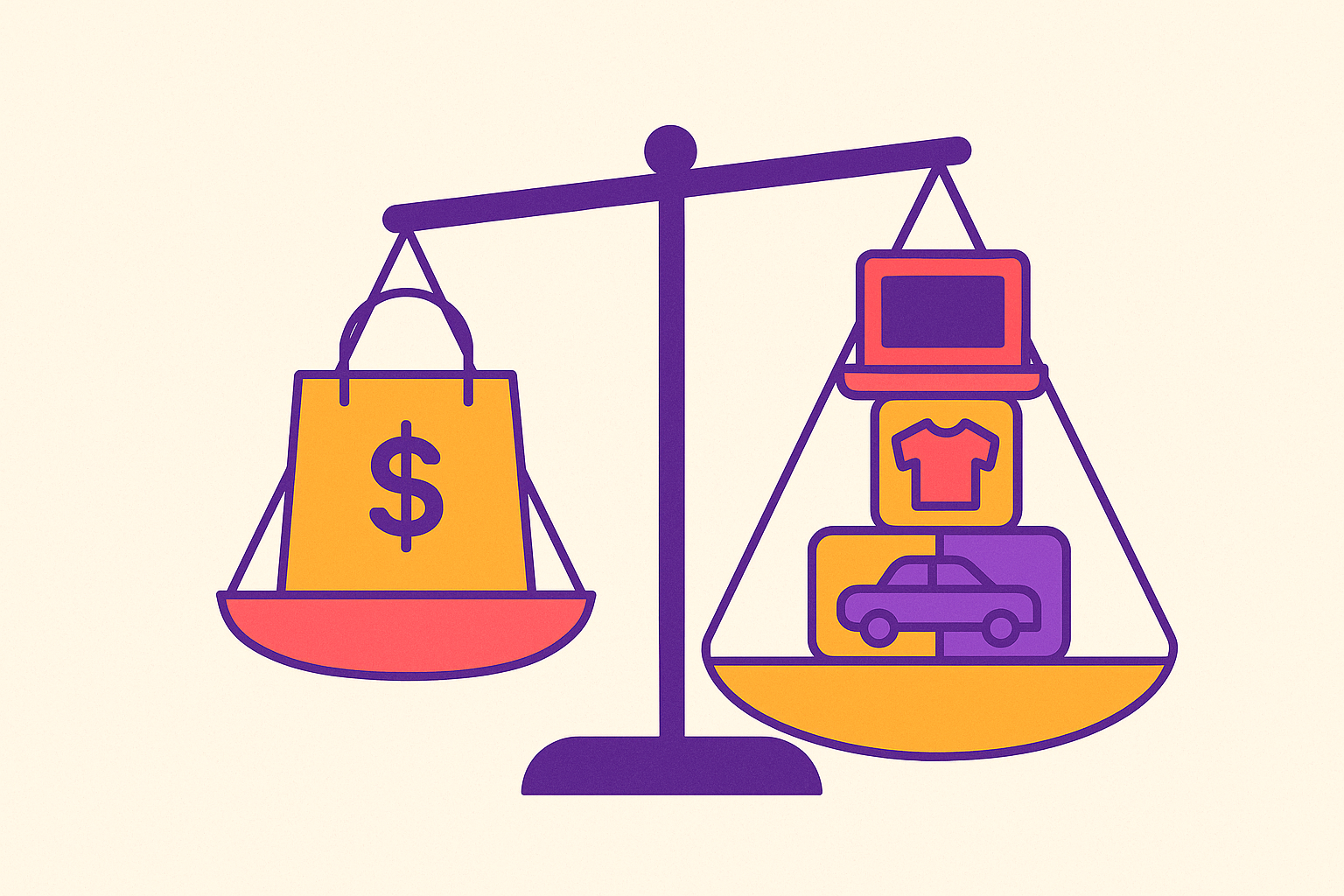
Reselling gets lumped in with every other side hustle out there, as if selling your old stuff on eBay and driving for a delivery app are the same kind of bet. They're not, and the only fair way to tell them apart is to measure them on the same scale: how much it costs to start, what an hour of work actually returns, how far the thing can grow, and how much it bends around a messy schedule. QuickBooks' 2026 Entrepreneurship Study found online selling leads all side hustle types, with close to half of all Americans earning side hustle income in 2025. It's a real financial decision a lot of people are already making, often without doing the math first.
Startup cost, hourly return, scalability, and flexibility are the four things this piece tracks all the way through, because they're the four things that actually predict whether a side hustle fits a specific life. A college student with a closet full of unworn clothes has different constraints than a parent working night shifts, and those constraints shape which side hustle actually fits, regardless of any "average side hustler earns X" headline. Given those four metrics, where does reselling actually land next to freelancing, gig delivery, and content creation?
What side hustles pay across the board, and why the averages mislead
Side hustle income numbers get thrown around like they mean something on their own, but the average figure quoted in most roundups is almost designed to mislead a beginner. SurveyMonkey's 2025 side hustle research puts the average monthly income well above the median, and that gap exists because a small number of high earners pull the mean way up while everyone else sits much closer to the bottom. A new side hustler should plan around the median, not the average, because most people starting out land far closer to that middle figure than to the number splashed across headlines, regardless of which hustle they pick.
QuickBooks' 2026 study reports an average that runs meaningfully higher than the Bankrate figure, and the reason comes down to sample makeup: QuickBooks surveyed a group that skews toward more active, established side hustlers, while Bankrate's number reflects a wider, more casual slice of the population. The same lesson falls out of both numbers. People who treat the work seriously and stick with it earn a lot more than people doing it on and off. That pattern holds up against another finding: most side hustlers report dealing with burnout at some point. The honest version of "how much does this pay per hour" has to include whether a person can keep doing it for months without running out of steam. A hustle that pays well for three weeks and then gets abandoned isn't actually a good deal.
Four kinds of side hustles appear repeatedly in this kind of comparison: online selling (reselling), freelancing or professional services, gig delivery, and content creation or social media. Those four cover almost everything a typical reader is actually weighing, and they're the four this piece measures against each other once the reselling numbers are on the table.
What reselling realistically pays at each level of commitment
Reselling income isn't one number. It moves in tiers tied directly to how much time and effort a person puts in, and understanding those tiers is the only way to set expectations that won't disappoint anyone three weeks in.
Someone selling off household clutter a few hours a week is at the casual end, and that tier is much closer to the median side hustle figure than to any average quoted in a headline. Adding a real sourcing system, consistent listings, and some repeat effort makes the number climb meaningfully above that casual tier. Full-time operators running hundreds of active listings can reach the upper end of what side hustles pay overall, but that tier takes real infrastructure to sustain, not a weekend project.
The number that actually matters in all three tiers is net profit, not gross sales. Platform fees, shipping costs, the original cost of the goods, and supplies all eat into whatever the listing sold for, and gross sales figures from viral "I made $2,000 this month" claims almost never account for any of that. Beginners who skip this subtraction step consistently think they're earning more than they are, and that gap catches up with them eventually. The climb from casual seller to serious operator also takes real time. Most people take a full year or longer to reach steady four-figure monthly net income, so the ramp builds gradually.
Reselling earns its second look next to other side hustles with the first dollar spent, not the hundredth. Startup capital can be close to zero, because selling items a person already owns costs nothing to source in the first place. That's a sharp contrast to freelancing, which usually demands some skill-building or a portfolio before the first paying client shows up, or delivery gigs, which require owning a working vehicle before earning a cent. Reselling clears that bar before anything else on this list does.
How reselling stacks up against freelancing, gig delivery, and content creation on the metrics that matter
Each of these four side hustles has its own shape once it's measured on cost, hourly return, scalability, and flexibility, and reselling's shape is genuinely different from the rest. Different doesn't mean better across the board. It means better for some people and worse for others, which is exactly the point of running the comparison this way.
Startup cost splits the four hustles cleanly. Reselling from owned inventory starts at close to zero dollars, since the items already exist somewhere in the seller's home. Freelancing and professional services carry a low cash cost but demand a skill or a portfolio built up before the first invoice, which is really a time cost dressed up as a non-cost. Gig delivery needs a vehicle and ongoing fuel money, which shuts the door for anyone without reliable transportation. Content creation costs almost nothing in cash but asks for a long runway, since most creators earn nothing for months before any money appears. QuickBooks' 2026 study found freelancing and contract work is the side hustle where Millennials concentrate most heavily, and their higher average earnings likely reflect a skill premium built over time, not some structural head start available to anyone walking in fresh.
Hourly return tells a different story. Freelancing and professional services post the highest hourly rates in the data, driven by skilled freelancers earning well above what most other hustle types command. Reselling's hourly return depends almost entirely on what a seller picks to sell and how efficiently they source it. High-margin items that move fast produce a strong effective hourly rate, while low-margin, high-volume categories drag that number down. Gig delivery trades hours for dollars in the most direct way of the four, with a predictable rate that's hard-capped by driving time and whatever the platform pays that week. Content creation's hourly return is near zero in the early months and can climb very high later, with a wider spread of outcomes than any other category on this list. A beginner reseller's first few sales often feel underpaid, but a practiced seller who has found a niche earns noticeably more per hour than where they started.
Scalability separates the four hustles by what it actually takes to grow. Freelancing scales by raising rates or adding clients, and both routes work, but both still require active hours. Income stops the moment the work stops. Gig delivery barely scales at all. More hours behind the wheel is the only real lever available. Content creation can scale dramatically once an audience compounds, but a lot of creators never get there, and the failure rate before that point is steep. Reselling scales through deeper inventory, more listings, and sharper niche knowledge, and a seller who builds a real system can grow income without growing hours in lockstep. That ceiling requires deliberate investment in both capital and time. It doesn't compound on its own the way a large audience does.
Scheduling flexibility is where reselling separates itself most clearly from the pack. Sourcing, listing, and shipping can all happen whenever the seller has a spare hour, with no client waiting on a deadline and no app dictating shift hours. Gig delivery looks flexible on paper, but the income is confined to active hours behind the wheel, while a reselling listing keeps working on its own once it's published. Freelancing's flexibility swings wildly by client, since retainers and recurring projects bring their own scheduling demands. For anyone juggling an irregular routine, caregivers, shift workers, parents with young kids, reselling's ability to earn without needing a fixed block of time is a real edge none of the other three common hustles match as cleanly.
The type of person reselling suits (and when another hustle wins)
Reselling fits a specific kind of person well: someone with stuff already sitting around the house, a schedule that doesn't bend to anyone else's calendar, little appetite for spending money upfront, and no existing skill that already commands a market rate. Outside that profile, the other three hustles often win on sheer hourly return, and reselling isn't the right answer for everyone.
Reselling makes the most sense when the sourcing cost is already paid, there's clutter sitting around that cost nothing extra to acquire, the schedule is too unpredictable for shift work or client calls, or the goal is a one-time cash boost. Freelancing or professional services beats reselling for anyone who already has a skill the market pays for, since the hourly ceiling runs higher and a portfolio or track record gets income flowing faster than reselling typically can. Gig delivery suits people who want certainty over variability and have a reliable vehicle, trading reselling's unpredictable margins for a flat, known rate per hour. Content creation suits people willing to wait months for a payoff, built around a genuine interest or personality that can hold an audience's attention, and it fits best for anyone who doesn't need money inside a few weeks.
SurveyMonkey's research found 44% of Americans say they need a side hustle to survive financially, and for that group specifically, reselling's near-zero startup cost and fast path to a first sale make it one of the more realistic options on the table right now, not a someday project. Once the closet and the garage are empty, reselling needs a real sourcing pipeline to keep going. Anyone hoping for a truly passive, set-it-and-forget-it income stream will eventually hit that wall unless they build a supply chain, and building one takes effort a lot of casual sellers never signed up for.
How to price resale items accurately so the hourly return is worth the effort
Pricing decides more about whether reselling is worth the time than almost anything else in the process. An item priced off real sold data sells faster and at a better margin than one priced off a gut feeling or a hopeful asking price, and that single habit separates sellers who earn a decent hourly rate from sellers who don't.
Asking prices are what other sellers wish they'd get. Sold prices are what buyers actually handed over, and only the second number counts as real market evidence. Reclaim's pricing guide treats that distinction as the foundation of accurate resale pricing, and it holds even for items listed on Facebook Marketplace, which doesn't publish any sold price history of its own. eBay's sold data still works as the benchmark there, adjusted a bit for local market conditions.
One lucky sale at a high price doesn't mean an item is worth that every time. The smarter read is the cluster of recent sold prices, not the single best or worst one in the batch, since that cluster reflects what buyers are actually willing to pay right now. Condition grading matters just as much. The price gap between a like-new item and a beat-up one of the same model can be large, and getting that grading right protects both the seller's margin and the buyer's trust once the item ships.
All of this research takes real time, and that time is one of the biggest hidden costs in any reselling income estimate. The AI reselling app Reclaim: Sell with AI automates the step: a photo gets the item identified, its condition graded from the image, live eBay sold data pulled in, and a full listing with a suggested price generated on the spot. For a casual seller who doesn't want to manually research every single item before listing it, that removes the exact friction point standing between owning something and actually getting it in front of a buyer.
Where to sell: matching item type to marketplace so fees don't eat the margin
Picking a marketplace is a decision about fees and who's shopping there, not a matter of brand preference. Poshmark, for example, charges a 20% commission, and a fee structure like that can quietly erase the margin a careful pricing job just worked hard to protect. The right platform depends on what's being sold, and getting that wrong undoes a lot of the effort spent getting the price right in the first place.
eBay reaches a national pool of buyers, which makes it the better fit for niche, collectible, or specific-demand items that might not have a buyer anywhere nearby. Reclaim lists directly to eBay and Facebook Marketplace, with more marketplaces planned down the line. Facebook Marketplace suits common, bulky, or local-pickup items better, since furniture, large appliances, and everyday household goods tend to move faster with a local buyer and at no platform fee when the sale is a straight cash handoff. Matching the item to the right marketplace is the last step in the same math that started back at pricing: protecting every dollar an hour of work actually earns, rather than losing it to a fee structure that never fit the item in the first place.