Why People Hold Onto Things They Never Use
Objects become stand-ins for who we were or hope to become.
How possessions become extensions of identity, including outgrown identities
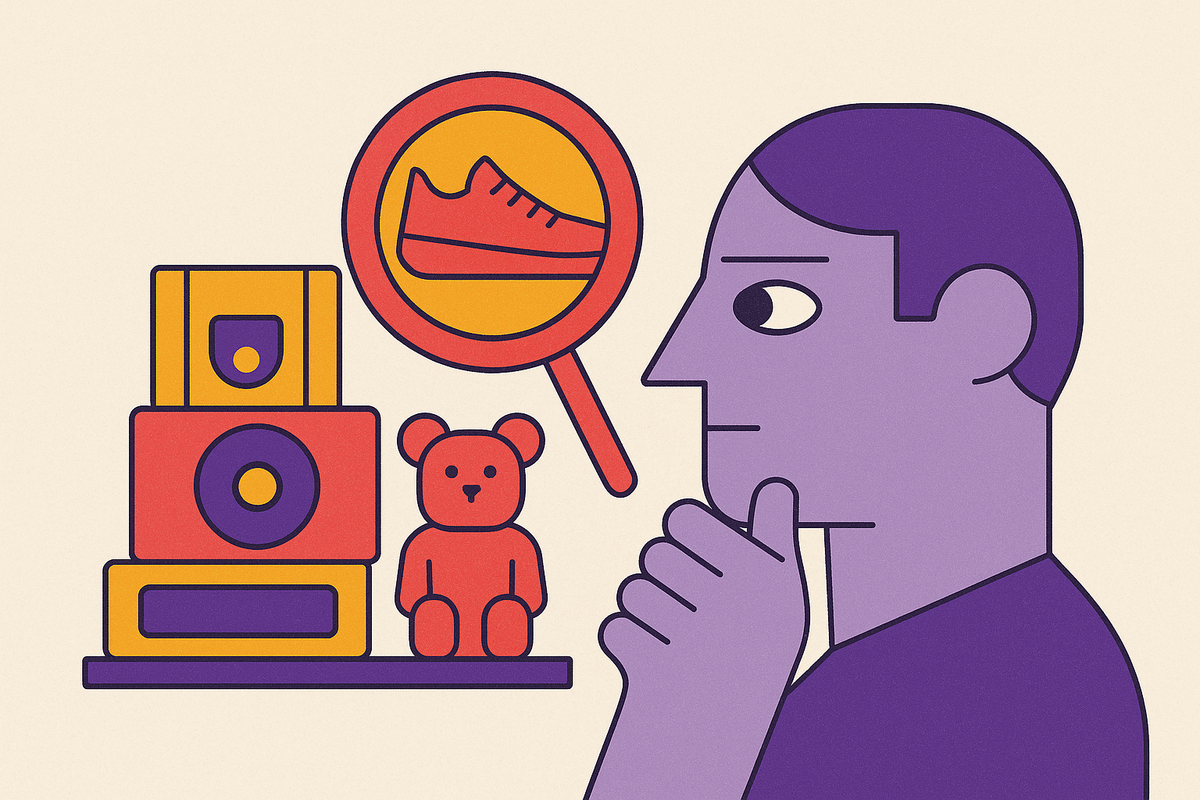
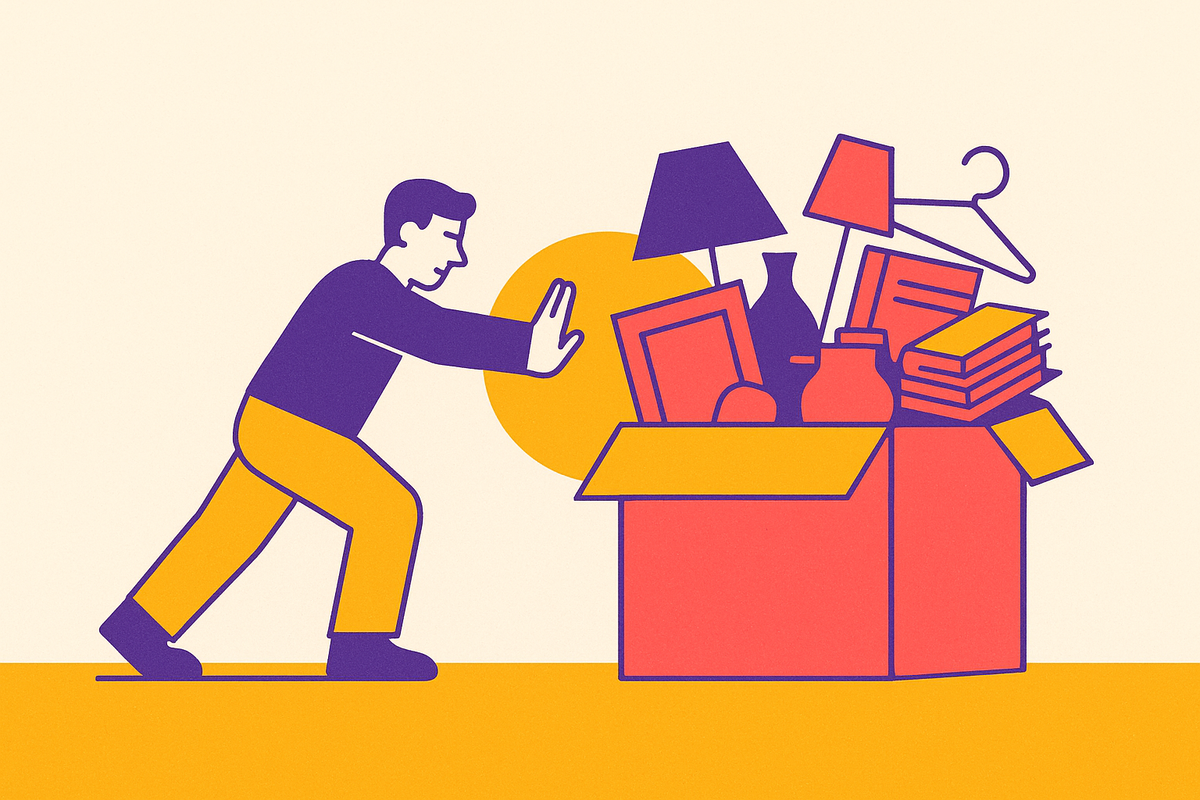
That gut punch of "I should really get rid of this," followed by total paralysis, is a brain treating a physical object like it's load-bearing for a sense of self, a memory, or a future plan that hasn't happened yet. It's a brain treating a physical object like it's load-bearing for a sense of self, a memory, or a future plan that hasn't happened yet. The popular explanation, that clutter means someone is disorganized or procrastinating, misses what's actually going on. Objects absorb meaning the longer they sit around: they stop being things and start being stand-ins, for relationships, for milestones, for people someone used to be or still hopes to become. Psychologist Dr. Randy Frost calls sentimental items "emotional memory holders." Get rid of the object, and it can feel like getting rid of the memory itself.
Dr. Catherine Roster at the University of New Mexico, in research published in the Journal of Consumer Psychology, found that people resist tossing items tied to personal identity even when that identity no longer fits their actual life. Two flavors appear constantly.
The first is past identity: gear from who someone used to be. The guitar nobody's played since college. The paint set from a life that used to include painting. The second is aspirational identity: stuff tied to who someone meant to become. Unread books stacked by the bed. Art supplies still in shrink wrap. A treadmill wearing a coat rack's job.
The fix isn't convincing someone the object is useless. It isn't, because the object was never really about the object. Those running shoes gathering dust for three years are about a self-concept the owner isn't ready to drop yet. They're about a self-concept the owner isn't ready to drop yet. Telling someone "you haven't worn these in a year" evaluates the shoes as furniture for utility, when the brain is busy guarding an identity instead. Identities don't respond to spreadsheets.
Sentimental attachment and the fear that discarding an object erases the memory it holds
This one runs on a different circuit. The attachment centers on who someone else was to the owner, not on who the owner is. The object stands in for a person, a relationship, a single moment that already happened and won't happen again. Letting go of the thing feels, on some gut level, like letting go of the memory or the person attached to it.
Research published in the Journal of Anxiety Disorders found that people with strong sentimental ties to their belongings show grief-like symptoms when they part with them. Not mild annoyance. Not mild reluctance. Symptoms that look like mourning.
This appears in a grandparent's furniture nobody has space for, a dead relative's trinkets sitting in a drawer, a kid's crayon drawing from four birthdays ago, a sweater from someone who isn't around to wear one anymore. None of these get evaluated for usefulness. They get evaluated for whether letting go feels like betrayal, and that's a test a donation bin can never pass.
The "just in case" scarcity mindset and fear of future regret filling closets
Regret aversion is the mechanism here, and it disguises itself well as responsible planning. Deciding later becomes the default setting, and "someday" quietly turns into a deferral nobody ever revisits.
Dr. Susan Krauss Whitbourne points out that this scarcity mindset runs strongest in people who lived through real economic hardship. Keeping something "just in case" doesn't feel irrational to them. It feels like basic prudence, the same instinct that says keep a spare tire in the trunk. One survey found 61% of Americans hold onto items they haven't touched in over a year, specifically out of fear they'll need them down the line.
Most garages contain the same greatest hits, including a drawer of orphaned cables with no matching device, a bread maker used twice in its early days, and a broken lamp waiting on a repair that was never going to happen. Each item is small on its own. The pile they build together is not.
Optimism bias and the items people keep because they "might sell someday"
Dr. Joseph Ferrari at DePaul University has a name for this one too: optimism bias. It's the belief that old tech, hobby supplies, or furniture will eventually sell for real money, so tossing them now means leaving cash on the table. The stuff doesn't stick around because it gets used. It sticks around because it might, someday, get sold, and someday is doing a lot of quiet work in that sentence.
The endowment effect captures the mechanism: people overvalue things purely because they own them, and ownership inflates the price tag in someone's head independent of what the item is worth to anyone else. That's why, according to a 2022 Deloitte report, consumers routinely overprice used goods by up to 60% above what buyers actually pay for comparable items.
The outcome is predictable, and it isn't kind. The item sits. It doesn't sell, because the owner's asking price was never anchored to reality. It was anchored to sentiment wearing a price tag, and price tags don't fool buyers the way they fool owners.
Decision fatigue and overwhelm: why the size of the pile makes starting impossible
Dr. Roy Baumeister's research, done across Case Western Reserve and Florida State, on decision fatigue explains why "keep it for now" is so sticky. Every decision, even a small one like trash-or-donate, burns through a limited pool of mental energy. Running that pool dry means the brain defaults to whatever takes the least effort right now. Usually that means keep it, deal with it later.
Clutter compounds itself. Every decision avoided today adds one more item to tomorrow's pile, which makes tomorrow's avoidance even more likely. The pile is actively working against future-you, quietly, like compound interest, except the currency is dread instead of cash. It's actively working against future-you, quietly, like compound interest, except the currency is dread instead of cash.
Mental health plays into this directly, and the fix has to account for it rather than lecture past it. Conditions like anxiety, depression, and ADHD interfere with decision-making and organizing, slowing the sorting process further. Cluttered spaces have also been linked to elevated stress responses, so the mess itself becomes a source of chronic mental strain. Clutter causes the very state of mind that makes tackling clutter feel impossible. A neat trick, if anyone still finds irony charming at this point.
Altruism and values, not just fear, drive keeping, and enable letting go
Not everyone holding onto stuff is scared. Some are just being kind, or trying to be, and treating every hoarder as an anxious wreck misses this. Dr. Mary Dozier's team at Mississippi State University found that adults over 50 with hoarding disorder scored almost universally high on altruism, compared to others of the same age and gender. That's a strange finding only if the assumption is that hoarding runs on fear alone.
"This needs to go to a good home." "My grandmother gave me this." Both are values statements. The person is keeping the object not out of anxiety but out of duty, to the item, to the planet, to whoever handed it over.
Dozier's research, through Vejon Health, also found something that cuts against the popular image of decluttering as agony: older adults sorting through belongings often reported feeling good during the process, not distressed. Fear of making the wrong call isn't the universal engine everyone assumes it is, and treating it that way misses the people for whom this is actually a values exercise, not a trauma response.
A clinical study from Dozier used a motivational-interviewing approach delivered in six one-hour, weekly, in-home sessions. It helped older adults cut clutter while increasing positive mood, not just tolerating the process but coming out the other side better off. The technique swaps a question like "does this spark joy," which is about right now, for something longer-range: does keeping this actually serve what someone cares about?
Dozier has described giving away a dress from her sister's wedding because usefulness and generosity mattered more to her than holding onto an object for its own sake, even though the memory still mattered. Somebody else, with different values, might keep that same dress forever. Both choices are legitimate. The values are just different, which is the whole point.
The value of knowing what you're holding
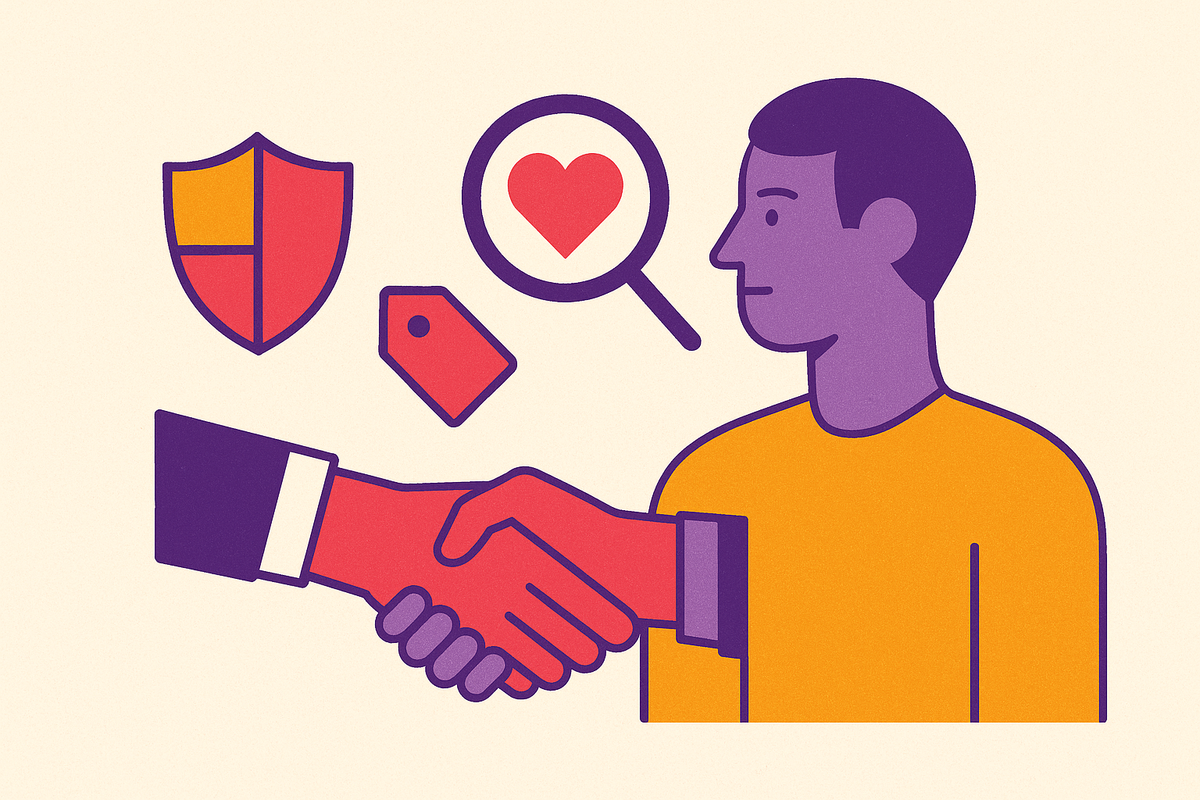
The tendency to overestimate an item's worth has an actual fix, and it's boring in the best way: check what things sold for, not what other people are hoping to get for them. That's the entire trick, and most people skip it because hope is more fun than data.
Sold listings show what a real buyer actually paid. Active listings show what a hopeful seller wishes someone would pay. Confusing those two numbers is how a $40 item convinces itself it's worth $100. If dozens of active listings are $100 while completed sales cluster around $40, the item is a $40 item. The market already voted, and it doesn't care what the listing says.
eBay's sold listings filter, on both desktop and mobile, along with its Product Research tool in Seller Hub (the tool that used to be called Terapeak), gives sellers access to historical sold data going back up to three years, including prices from accepted Best Offers. That's real data, not vibes, and it takes about the same amount of time to check as it does to keep arguing with a mirror about it.
Sell-through rate matters too. Anything above 50% signals steady buyer demand for that category. That number reframes the whole conversation, from "this might sell someday" to "this specific category actually moves." One is a hope. The other is a fact anyone can check in under five minutes, less time than most people spend deciding whether to check it.
Moving from understanding to action: approaches that work for each type of holder
Different drivers need different fixes, and pretending otherwise is where most decluttering advice falls apart. Trying to declutter someone's identity-tied guitar with a spreadsheet works about as well as trying to talk someone out of grief with a price chart. It doesn't, and it never will.
For identity-tied items, ask whether the object still reflects who they are now, or only who they used to be, or once planned to become. It's whether the object still reflects who they are now, or only who they used to be, or once planned to become. Keeping a memory alive doesn't require keeping the physical object hostage in a closet.
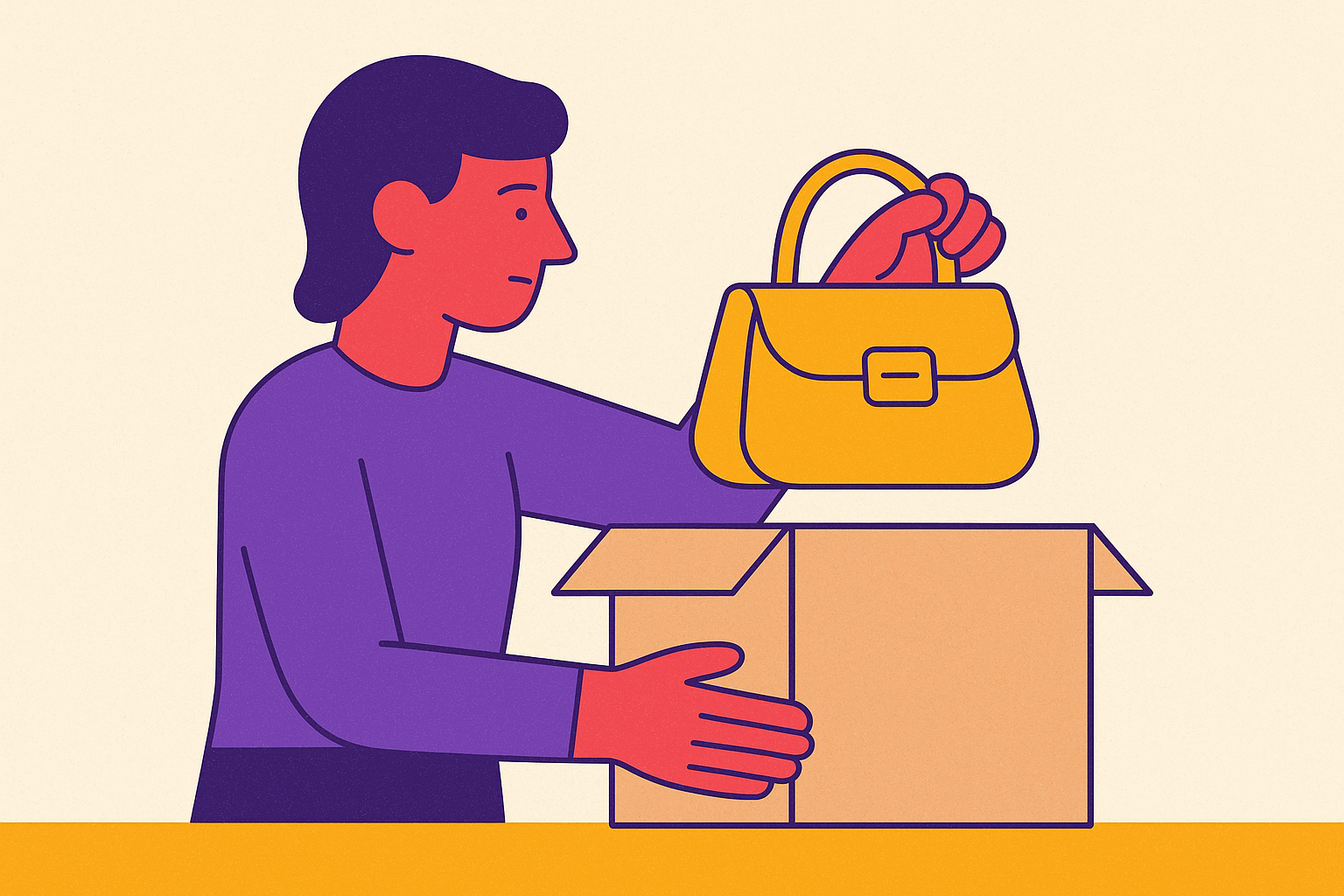
For sentimental and obligation items, a camera does most of the heavy lifting. Photograph the object before it goes: that preserves the memory without letting the object keep claiming square footage in a house. It also helps to separate two things that get tangled together constantly, valuing a person and feeling obligated to store their old belongings forever. Those are not the same commitment, and conflating them is how a spare room turns into a storage unit with a bed in it.
For just-in-case items, run a plain time test. If a defined window (a year works fine) has passed without needing the thing, the odds of needing it soon are low, whatever the anxious brain insists otherwise. Weigh replacement cost against storage cost too. It's often cheaper to rebuy the item later than to keep paying, in space and in the low hum of mental clutter, to store something that may never get touched again.