Which Product Categories Are Growing Fastest in Resale
Electronics, gaming, and activewear dominate resale as permanent retail categories, not trends.
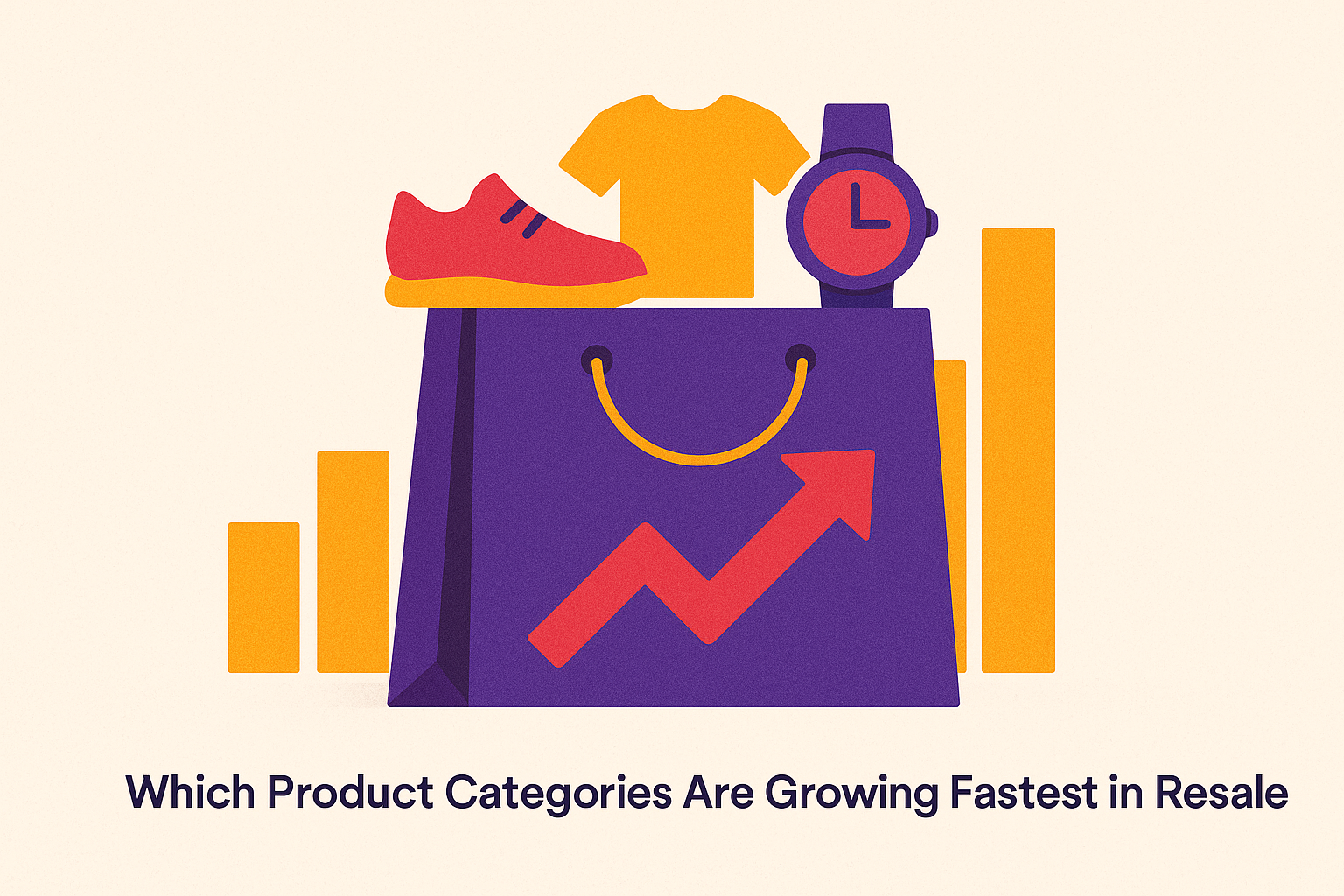
Resale stopped being a side hustle for the short on cash and turned into a normal way to shop. Three things are pushing it at once: higher prices sending buyers looking for value, younger shoppers who check resale before they ever open a new-item tab, and platforms that make listing something for sale about as hard as posting a photo. When you put those three together, resale stops looking like a trend and starts looking like a permanent lane in retail.
That distinction matters if you're deciding what to sell. A category that's hot because of a 15-second trend will cool off just as fast. A category that's growing because of a lasting shift in how people shop sticks around, and most of the categories picked up speed recently for the second reason. eBay alone counts 134 million active buyers worldwide, which gives a sense of just how large the pool of demand is for anyone with something to sell.
Consumer electronics: the largest resale category
Electronics holds the top spot in resale, by listing volume and by buyer demand, and nothing about that is temporary. New phones, laptops, and gadgets cost a lot. People upgrade on a schedule whether their old device is broken or not. And there's always a buyer who wants last year's model for half the price. When you put those three facts together, you get a category that refills itself every single year.
Break it down by sub-category and the pattern gets clearer. Smartphones, especially iPhones and flagship Android models, sell steadily, but accessories (cases, chargers, power banks, screen protectors, car mounts) move even more reliably, since people replace those regardless of whether they've upgraded their phone. Computers and parts follow a similar logic: remote workers, students, and gamers keep demand high, and individual components like GPUs, SSDs, and memory modules often sell at better margins than full systems, since builders like to upgrade one piece at a time instead of buying a whole new machine.
Older tablets sell fast to parents who want something cheap for a kid, which makes them an easy win if you're clearing out a drawer. Wearables, smartwatches and fitness trackers, get pushed into resale constantly, because new models come out so often that last year's version still looks decent if you don't need the newest one. VR headsets are picking up buyers too, because prices are lower and a wave of new VR games has landed. Limited editions and bundles tend to do especially well right around a big game release. Smart home gadgets are cheap enough now that buyers often start small, a smart plug or a bulb, before they work up to a full speaker or hub setup, so demand stacks across several price points instead of just one.
Small parts deserve a mention too. OEM remotes, power adapters, console covers, tool chargers, appliance parts: none of these look exciting, but they solve one very specific problem. When someone needs the exact right part number or connector, they'll pay a fair price without blinking, and that item moves fast. Don't assume anything is junk until you check what it actually belongs to and look up what it sold for recently, not what someone's asking for one right now.
Video games and consoles: nostalgia and new releases pulling in opposite directions
Gaming resale runs in two directions at once, and that's what makes it interesting. One group of buyers wants whatever just came out. Another group wants a console or cartridge from twenty years ago. Both groups are shopping at the same time, on the same platforms, so sellers with brand-new inventory and sellers with dusty old cartridges from a childhood closet can both find a buyer.
The nostalgia side is doing real work right now. Older franchises and remastered titles have been climbing in price, so something that looks outdated might be worth noticeably more today than it was a few years back. Consoles and controllers, meanwhile, are some of the best items for quick cash: demand stays strong all year, prices are easy to check against recent sales, and turnover is fast.
So that box of old game cartridges in the garage, or the console pulled out of a storage unit, isn't automatically worth nothing. It might be worth more than expected. Value swings wildly between titles and models that look nearly identical on the shelf, so checking sold prices for the exact title or exact model, not just the general category, is the only way to know what's actually in your hands.
Apparel and fashion: the second-largest eBay category, with activewear as its fastest-growing segment
Apparel and accessories make up the second-largest share of all eBay listings, which settles any argument about whether clothing counts as a real resale category. It's a volume business, and one segment inside it is outrunning the rest: activewear.
Activewear sells well for a simple reason: buyers can spot the brand from a thumbnail. Someone scrolling past a listing can tell it's Lululemon, Nike, or Patagonia before reading a single word of the description, and that kind of instant recognition cuts down on back-and-forth questions and speeds up the sale. Activewear also holds up physically better than a lot of everyday clothing, so a used piece still looks close to new.
Plus-size fashion is another engine inside this category. Retail stores often carry thin selections in extended sizes, so when stylish pieces do show up secondhand, they move fast, because buyers are finding options they can't easily get anywhere else. There's also a younger, trend-driven niche building inside resale fashion right now, even if it's still early days for solid pricing patterns. Outdoor clothing stands out as a high-margin pocket of this category: technical, branded gear like rain jackets and hiking boots holds its value because buyers know what they're buying and what it's worth.
Kids' gear and children's clothing: fast turnover driven by growth, not wear
Kids' gear runs on a completely different clock than everything else in this piece. Nobody outgrows a laptop. Kids outgrow jackets, shoes, and car seats every few months, and that single fact makes children's resale one of the most dependable categories out there, regardless of what the economy is doing or which trend is hot this year.
Parents, millennials and Gen Z alike, have gotten comfortable buying gently used gear for fast-growing kids, and the math behind that decision is hard to argue with. A jacket bought at full price and worn for one season loses most of its value to growth, not to wear and tear. The item still looks brand new, it just doesn't fit anymore, and that's the kind of inventory that moves fast on resale.
For bulky items, strollers, high chairs, play equipment, Facebook Marketplace tends to be the destination of choice, since the local, no-fee setup fits items that are expensive and annoying to ship. Bundling works especially well in this category too: a parent shopping for the next size up usually wants several pieces at once, so grouping items together often moves inventory faster and at a better combined price than listing everything separately. None of this requires designer labels, either. Kids' items in good condition sell quickly because buyers are shopping for function and fit, not status.
Power tools and premium kitchen appliances: the categories where tariff pressure is sending buyers to resale
Power tools and premium kitchen appliances were already solid resale categories before tariffs came into the picture, and tariff-driven price hikes on new units have only added fuel. Industry tracking has shown increases on new tools, including roughly 4% on brands like DeWalt and Craftsman in 2026, and consumer guidance has pointed buyers toward used or refurbished options as a way to dodge tariff-driven price jumps on appliances and electronics. That's a direct nudge from economic policy straight into the resale market.
But tariffs are an accelerant here, not the whole engine. Power tools were already a strong local-sale category on their own merits: they're durable, easy to test (plug it in, pull the trigger, see if it spins), and homeowners upgrade them constantly without the old one ever actually wearing out. Premium kitchen appliances, blenders, air fryers, vacuum sealers, follow the same logic. They're built to last, so a used one still performs like new, and buyers chasing a quality appliance at half the retail price are an easy audience to find.
Kitchen appliances are attractive for sellers because demand is strong and the condition risk is low. A scratched stand mixer still makes bread just fine. A cracked phone screen is a much tougher sell. Estate sales, moving sales, and kitchen cleanouts are reliable places to find these items cheap, mostly because the people selling them have no idea what the used market will actually pay.
Outdoor and fitness gear: seasonal spikes on top of a growing baseline
Outdoor and fitness gear benefits from two forces layered on top of each other. There's steady, long-term growth in how many people are buying gear for an active lifestyle, and there's a seasonal rhythm on top of that baseline, which smart sellers can plan their listings around.
Outdoor clothing is one of the better margin categories in all of resale, largely because branded technical gear, rain jackets, base layers, hiking boots, holds its value and buyers already know which brands they're hunting for. That brand recognition does a lot of the selling work before a buyer even reads the listing.
Timing changes the outcome more than people expect. A set of dumbbells or a lightly used trail pack listed in March, right as spring motivation kicks in, will find a buyer faster and at a better price than the same exact items listed in November, when everyone's thinking about staying warm indoors instead of hitting a trail.
LEGO, trading cards, and collectibles: the categories where condition and completeness determine value
Collectibles play by a different rulebook than everything covered so far. In most categories, condition is one factor among several. In collectibles, condition and completeness are the main thing setting the price, and two items that look nearly identical in a photo can sell for wildly different amounts depending on details a casual seller might not even think to check.
LEGO and trading cards sit at the center of this. LEGO sells well because of strong brand-specific demand and a real premium for sets that are still sealed. Trading cards have an active collector base that prices items sharply based on condition and rarity, so a corner ding or a centering flaw can separate two nearly identical cards by a wide margin. Vintage goods like Pyrex follow the same pattern: a complete set in a specific colorway, turquoise, for example, can spark a bidding war, while a mismatched assortment of similar-looking pieces might barely sell. One lot sells for real money and the other sits because the difference goes beyond looks.
A sealed LEGO set and an open, partial one are not the same product, even if a quick glance makes them look alike on a shelf, and the upside in this category only goes to sellers who actually check what they're holding, down to the exact set number or card variant, before they price it.
Checking sold prices, not asking prices, the one skill that applies across every category
Every category in this piece rewards the same single habit: checking what items actually sold for, not what other sellers are hoping to get for them. Asking prices tell you what someone wishes a buyer would pay. Sold prices tell you what a buyer actually handed over. Those two numbers are often far apart, and mixing them up is how sellers either underprice a rare find or sit on an overpriced listing for months.
On eBay, filtering listings down to completed and sold items shows the real transaction history instead of wishful thinking. On Facebook Marketplace, the move is to scroll past the live listings entirely and look at items marked sold or pending, since that's where the actual prices buyers agreed to appear.
Pricing from there works best as a two-step process. Start near the high end of the sold-comp range, then adjust it down if the item doesn't move within a reasonable window. That approach applies just as well to a stand mixer from an estate sale as it does to a sealed LEGO set or a trail pack listed in early spring. The categories in this piece point to where the demand is sitting right now. Checking sold prices is how a seller gets paid what that demand is worth.