How Resellers Post Twenty Items on Facebook Marketplace in the Time It Used to Take to List Three
AI photo-to-listing tools cut the writing that eats most selling time.

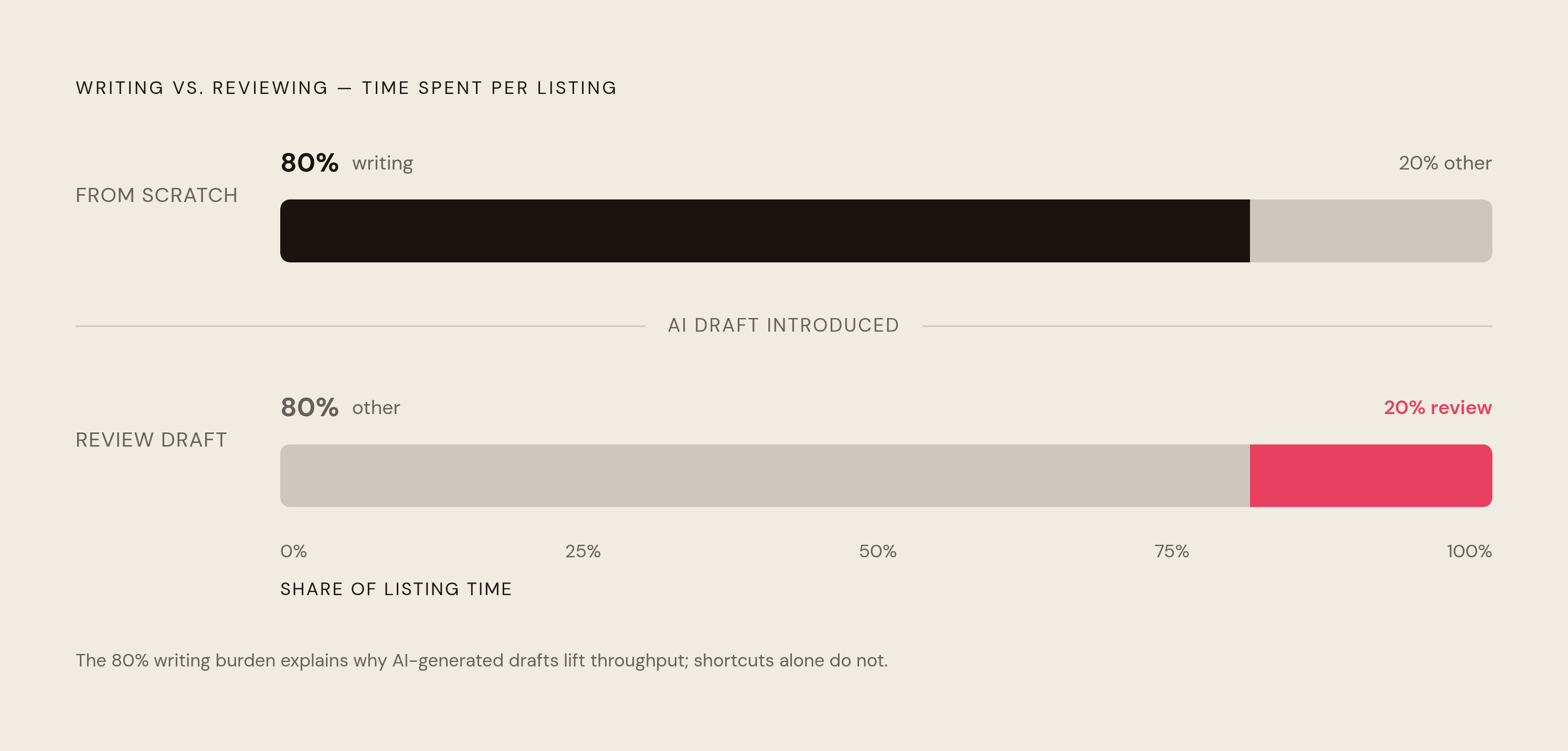
AI photo-to-listing tools offer a way to list items on Facebook Marketplace without typing descriptions. FlowLister, for example, turns a photo into a complete, editable listing in approximately thirty seconds. The shift from three listings to twenty in a session comes from removing manual writing, which consumes roughly 80% of listing time.
Why experienced resellers hit a throughput ceiling even after they get fast at posting
It is Saturday afternoon, the sell pile is waiting, and two hours have gone by with only three items listed. The photos are ready. The seller knows where the category menu lives and has pickup arrangements down to a sentence. Yet every item still demands a title, a description, honest condition notes, and a price that needs more support than optimism.
Experience makes the visible steps faster, but it does not remove that work. Selecting a category and confirming pickup take seconds once a listing exists. Scheduling tools and batch uploaders help get finished listings posted, while templates save some of the typing that comes up each time. The seller still has to describe the next item. The seller has streamlined the checkout lane while leaving one person to price every product.
What writing actually costs per listing when you add it up across a session
“Writing a listing” sounds like a small task until its parts are counted. First comes identifying the item and researching what buyers call it. Then come the title, description, condition disclosure, and pricing decision. Each item starts that sequence again, even when the seller has already mastered the posting interface.
Across a session, those small decisions become the main workload. A tool that uploads finished copy still leaves the seller responsible for producing it. That is why shaving time off publication produces modest gains, while moving from five minutes to thirty seconds per listing changes what a solo seller can get through. The useful comparison is not typing speed against typing speed. Compare the time spent writing from scratch with the time spent checking what is already written.
Is there an app where a picture creates the listing?
The 2026 generation of photo-to-listing tools uses computer vision to read an item’s photo. It looks for item type, brand markings, color, model details, and visible condition signals. AI then generates a title, description, condition notes, and item specifics, with a suggested price drawn from comparable sold listings.
FlowLister provides a concrete example of that process. It produces a complete listing in approximately thirty seconds, including a category, item specifics, and a comp-based price. It also publishes directly, leaving the listing fully editable. That distinction is useful when comparing tools. Generating a description alone is different from generating the information needed for a publishable listing.
The seller’s role changes, but does not disappear. Instead of drafting each item at a desk, the seller photographs a batch, reviews the generated listings, and publishes them. Visible condition signals still need an honesty check, and identification needs confirmation. AI removes blank-page work from the critical path. It does not make a seller’s knowledge of the item optional.
Pricing the items correctly before the AI writes the listing
A fast listing with the wrong price is still a slow sale. The common mistake is copying active asking prices, which show what sellers hope to receive. On eBay, filter to sold or completed listings and examine the last handful of actual sales. Read the cluster. One ambitious asking price is not a market.
Condition provides a rough starting framework when more precise comparisons are unavailable. A like-new, barely used item with its original packaging might start at 50–70% of retail. A functional item with visible wear belongs at a lower fraction. Because Marketplace buyers negotiate through the built-in offer feature, pricing slightly above the real floor leaves room for discussion without immediately underselling.
For a closer look at past sales, eBay Seller Hub’s Product Research tool, formerly Terapeak, has three years of eBay sales history and is free for sellers who have listed recently. PriceCharting covers video games, trading cards, and comics, while Discogs serves vinyl and BookScouter serves books.
What items to sell where — matching inventory to marketplace before listing at speed
Facebook Marketplace suits furniture, appliances, and bulky goods where local pickup avoids shipping. It also fits items for which a quick sale takes priority over the highest possible price. eBay suits collectibles, electronics, brand-name clothing, and rare items that benefit from a worldwide buyer pool. Auction-style competition can raise the price beyond what a local listing would achieve.
The practical default is local and bulky on Marketplace, with eBay added where broader competition could improve the return. Fees affect that decision, too. Marketplace charges no platform fees on local cash sales and takes a smaller cut of comparable shipped sales than eBay’s most common seller rate. A higher selling price therefore needs to be considered against what remains afterward.
Items worth more money, items that have sat for more than a month, and items that appeal to different groups of buyers can be worth listing on another platform. Low-value goods may not recover the extra work, even with faster drafting. Furniture suited to local pickup and platform-specific formats such as auctions can stay single-platform. A second listing should earn its place in the workflow.
Which categories generate the strongest returns and why the AI workflow fits them especially well
Electronics and audio can bring in good money, especially vintage receivers and gaming consoles. Their listings depend on accurate model numbers and condition details because buyers need to know exactly what is offered. Power tools follow the same pattern. Buyers search by brand and model, so accurate AI-generated item specifics help them find the item.
Brand-name stand mixers, blenders, and similar kitchen appliances hold value well. Their descriptions need clear condition notes and an account of the original accessories. Furniture has a sharper divide. Solid wood, mid-century modern, and quality leather pieces deserve priority, while IKEA and particleboard items generally offer too little resale value to justify much listing time.
Vintage band tees, designer pieces, and athletic wear from brands such as Lululemon and Nike sell well, with size, material, and brand details providing essential information. AI vision can read those details from photos of the clothes and their tags. Generic fast fashion is a weaker priority, as are common unbranded household goods.
Toys and collectibles need particular care over completeness. LEGO sets, Fisher-Price, and vintage toys can reach local families on Marketplace and collectors on eBay. Condition and missing pieces belong in the description. For niche games, cards, records, and books, the specialist pricing tools remain useful before listing, even when AI handles the draft.
A room-by-room declutter approach that feeds the high-speed listing workflow
Once writing stops consuming the session, the next constraint is having inventory ready to photograph. A room-by-room sort supplies that inventory without turning the whole home into a warehouse. Use four boxes marked Keep, Sell, Donate, and Discard, and decide when touching each item. Start with the entry and kitchen, move through bedrooms and bathrooms, and finish with the garage, attic, and basement.
Each room provides a contained finish line. Photograph its sellable items together, then let the tool generate the batch of listings while the next room gets attention. List as soon as the room is sorted, because a “to list later” box has a funny way of becoming furniture.
A move or life transition can use a four-week schedule instead. Week 1 is for sorting and taking photos room by room, and Week 2 is for looking up prices and putting smaller items into bundles. Week 3 puts high-value pieces up for sale or consignment because they take longest to find buyers. Week 4 handles a garage sale for remaining small items and scheduled donations. The garage, attic, and closets deserve attention because unused furniture, electronics, and household goods often concentrate there.
Writing listings that convert once the AI draft is generated
Start by checking that the item has been identified correctly, that the condition notes are honest, and that the suggested price fits the sold comps already gathered. With a good draft, those checks take seconds instead of the minutes it takes to write from scratch. Correct what is wrong or missing without rewriting for the pleasure of rearranging adjectives.
A complete listing answers the questions that otherwise arrive in Messenger. Its title includes brand, model, and condition, while the description covers dimensions, color, material, and flaws. Dimensions are especially important for furniture and appliances. Age and original retail price provide context, and pickup arrangements, payment methods, and terms such as “No holds” make the transaction clear.
Photos should show those details clearly so buyers have less to guess about. Facebook Marketplace allows up to ten photos per listing, so use the available slots for more angles. Showing an item in use or styled in its real setting helps buyers picture it in their own space and supports engagement. After publication, freshness also affects visibility. Relisting items that have sat unsold for several days can improve their exposure without changing the price.
Scams that target high-volume sellers on Facebook Marketplace and how to avoid them
More listings bring more messages, including fraudulent ones. The Google Voice scam begins when a supposed buyer asks for a phone number to “verify you’re real,” then requests a verification code. The FTC describes how that code lets the scammer create a Google Voice number linked to the seller’s phone number. A legitimate buyer does not need that code. Never hand it over.
AI-generated photos and automated messages can make scam accounts look real. Warning signs include a new account with few friends, no Marketplace history or ratings, a stock profile photo, and a location inconsistent with pickup plans. Immediate interest in an expensive item without questions, or an eagerness to pay full price, also warrants caution.
Other warning signs are buyers who ask to leave Messenger, refuse to meet in public, or push to rush the sale. For shipped items, use Meta Pay or PayPal Goods and Services rather than Zelle, Venmo, wire transfers, or gift cards. For local cash sales, meet in a public place with foot traffic. Some police departments provide designated safe exchange zones for exactly this purpose.
Putting the full workflow together — from photo to published listing in a realistic session
Begin the session with one room. Sort its contents into the four groups and photograph every sell item in a single batch, including the details needed for accurate descriptions. Before listing, pull eBay sold comps for the two or three most valuable pieces and use the condition framework for the rest. Choose Marketplace for local and bulky goods, and pick out any items worth more money that could sell for more on eBay.
Then send the photos through the listing tool. FlowLister generates complete drafts with comparable-sale pricing in roughly thirty seconds per item. Check the item’s identity, condition, and price, and add what is missing without writing each description again. Publish to Marketplace and cross-list the items whose wider buyer appeal justifies it. Use the photo slots, reply quickly, and follow the safety rules for payment and pickup.
This makes twenty items in a session a workflow outcome. Draft generation is not the whole session, since sorting, photography, review, and buyer handling still take time. Nor does publication guarantee an immediate sale. The realistic gain is getting a room’s worth of sellable inventory listed in an afternoon.